
The Ultimate Guide to Choosing an Eye Doctor: Comparing Ophthalmologists and Optometrists
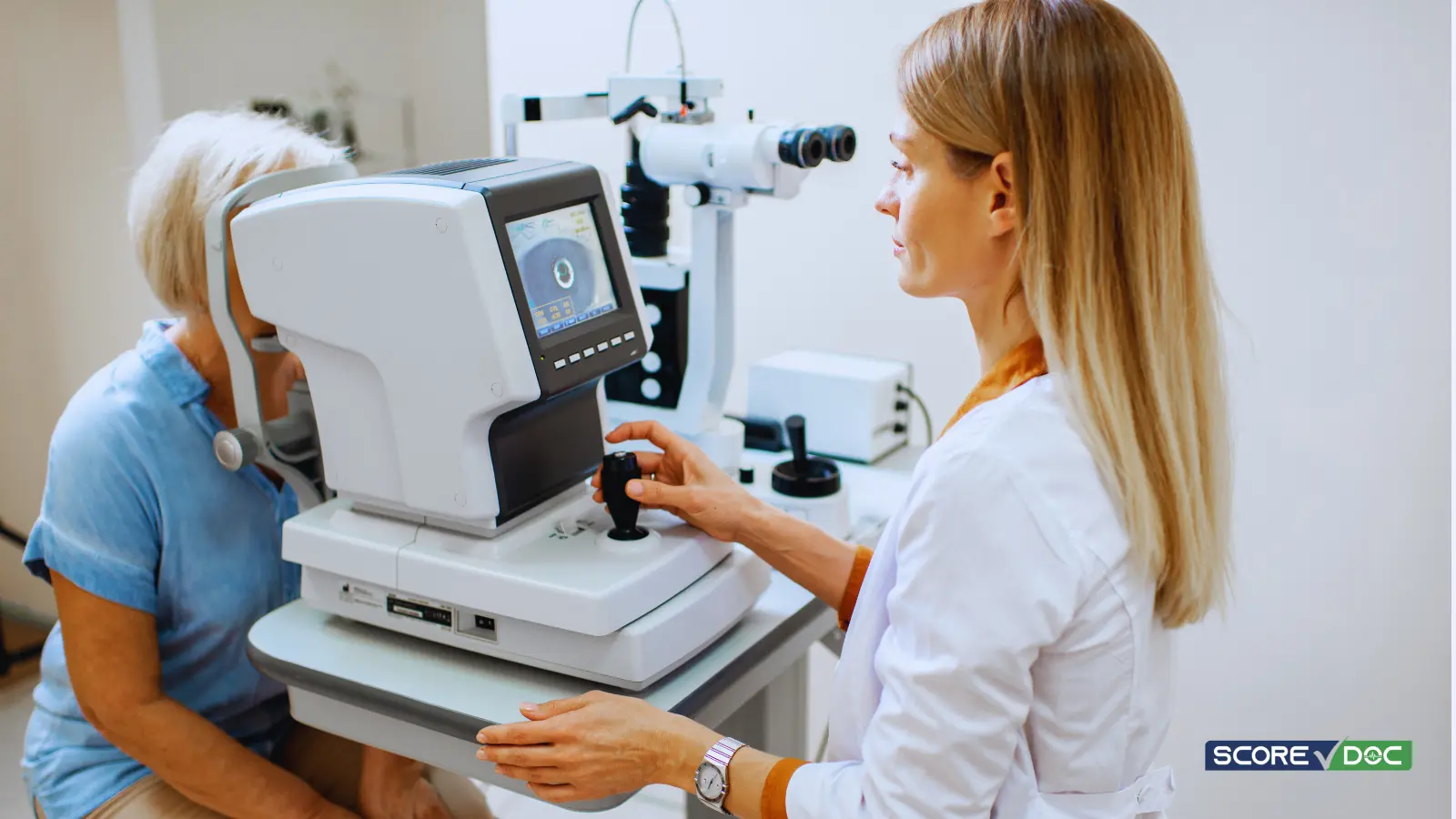
Choosing the right eye doctor is not always straightforward. Many patients assume that optometrists, ophthalmologists, and opticians perform the same role, but their training, scope of practice, and level of medical expertise differ significantly.
Seeing the wrong provider for a specific condition can delay treatment or require additional referrals. Understanding who handles routine vision care, who treats complex eye disease, and who performs surgery can help you make faster, more informed decisions about your eye health.
Understanding the Three Types of Eye Care Professionals
Although these professionals often work in the same clinics and may collaborate on patient care, their responsibilities are not identical. The key differences lie in their level of medical training, the types of conditions they treat, and whether they perform surgery.
At a basic level:
- One focuses primarily on routine vision care and early disease detection.
- One is a medical doctor trained to diagnose and surgically treat complex eye conditions.
- One specializes in fitting and dispensing corrective lenses.
The "Three O's" at a Glance
Below is a simplified comparison to clarify their roles.
Optometrist vs Ophthalmologist vs Optician
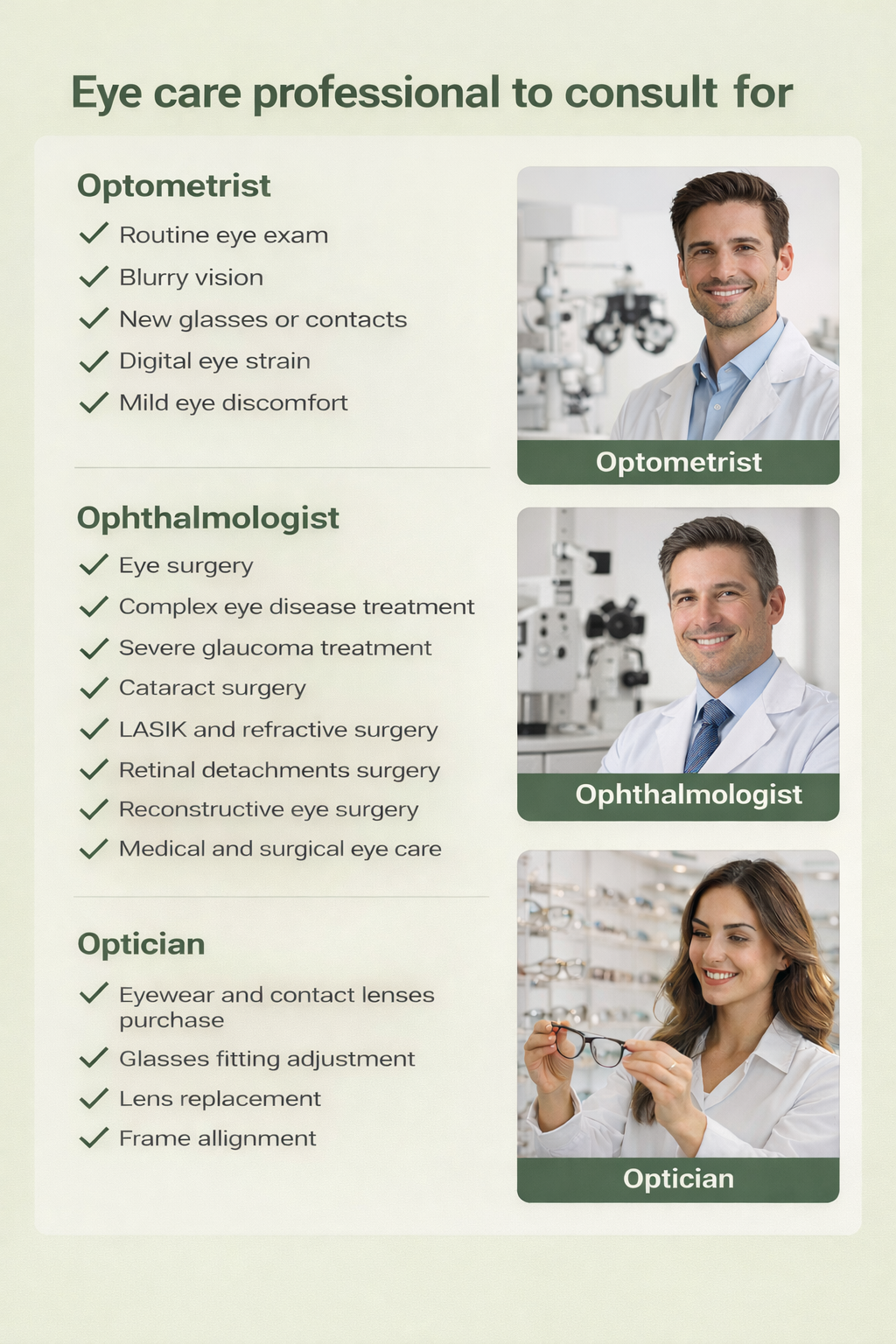
| Feature | Optometrist (OD) | Ophthalmologist (MD/DO) | Optician |
|---|---|---|---|
| Education | 4-year Doctor of Optometry degree | Medical school + internship + 3-year residency | Technical training or certification |
| Can perform eye exams | Yes | Yes | No |
| Prescribe glasses/contacts | Yes | Yes | No (fills prescription) |
| Prescribe medications | Yes (varies by state) | Yes | No |
| Perform surgery | No | Yes | No |
| Treat eye diseases | Yes (many conditions) | Yes (all levels, including surgery) | No |
| Best for | Routine exams, vision correction, early disease detection | Surgery, complex diseases, severe conditions | Fitting glasses and lenses |
Defining the Optometrist (OD)
An optometrist is a Doctor of Optometry (OD) who specializes in vision care and primary eye health.
Education
- 4 years of optometry school after undergraduate degree
- Clinical training in diagnosing and managing eye conditions
- Licensed healthcare professional
Scope of Work
- Perform comprehensive eye exams
- Prescribe glasses and contact lenses
- Diagnose and manage common eye diseases
- Treat dry eye, conjunctivitis, glaucoma (early stages), and more
- Prescribe certain medications (depending on state laws)
When Should You See an Optometrist?
You should visit an optometrist if you:
- Need a routine eye exam
- Have blurry vision
- Need new glasses or contacts
- Experience digital eye strain
- Have mild eye discomfort
- Need monitoring for early-stage glaucoma
Optometrists are typically your first point of contact for vision care.
Defining the Ophthalmologist (MD or DO)
An ophthalmologist is a medical doctor who specializes in eye and vision care, including surgery.
Education
- 4 years of medical school
- 1-year medical internship
- 3-year ophthalmology residency
- Optional fellowship (1–2 additional years)
They are fully licensed physicians.
Expertise
- Perform eye surgery
- Treat complex eye diseases
- Manage severe glaucoma
- Perform cataract surgery
- Perform LASIK and refractive surgery
- Repair retinal detachments
- Conduct reconstructive eye surgery
They manage both medical and surgical eye care.
Are you an eye care provider? Boost your visibility and attract new patients
Subspecialties of Ophthalmology
Ophthalmology includes several highly specialized areas:
Retina Specialist: Treats diabetic retinopathy, macular degeneration, retinal tears, and detachments.
Cornea Specialist: Handles corneal infections, keratoconus, and corneal transplants.
Glaucoma Specialist: Focuses on advanced glaucoma management and surgical treatments.
Pediatric Ophthalmologist: Treats children with eye alignment issues, congenital disorders, and pediatric cataracts.
Neuro-ophthalmologist: Manages vision problems caused by neurological disorders such as stroke, brain tumors, or optic nerve disease.
When Should You See an Ophthalmologist?
You should consult an ophthalmologist if you experience:
- Sudden vision loss
- Severe eye pain
- Eye injury
- Cataracts
- Retinal problems
- Advanced glaucoma
- Diabetic eye disease
- Need for LASIK or refractive surgery
Defining the Optician
An optician is not a doctor.
Opticians:
- Fit eyeglasses and contact lenses
- Adjust frames
- Ensure proper lens alignment
- Interpret prescriptions written by optometrists or ophthalmologists
When Should You Visit an Optician?
You see an optician:
- After receiving a prescription
- To get glasses fitted
- To purchase eyeglasses or contact lenses
- For frame adjustments
- For lens replacement
They do not diagnose or treat eye diseases.
Cost, Accessibility, and Insurance
Understanding insurance differences helps avoid billing surprises.
Vision Insurance
Typically covers:
- Routine eye exams
- Glasses and contact lenses
- Annual or biannual checkups
Medical Insurance
Covers:
- Cataract surgery
- Glaucoma treatment
- Retinal procedures
- Diabetic eye disease
- Eye infections
- Eye injuries
Used when seeing an ophthalmologist for medical or surgical conditions.
Approximate Cost Overview (Without Insurance)
| Service | Average Cost (US) |
|---|---|
| Routine eye exam | $100–$250 |
| Contact lens fitting | $100–$300 (higher for specialty lenses) |
| Cataract surgery | $3,000–$5,000 per eye |
| LASIK | $2,000–$3,000 per eye |
*Costs vary by region and provider
Common Eye Disorders Explained
Many vision problems are refractive errors, meaning the eye does not bend light properly, leading to blurred vision. These conditions are common and typically managed through glasses, contact lenses, or non-surgical treatments.
Myopia (Nearsightedness)
Myopia makes distant objects appear blurry while nearby objects remain clear. It occurs when the eye is slightly longer than normal or the cornea is too curved. Myopia is commonly corrected with glasses, contact lenses, or refractive surgery.
Hyperopia (Farsightedness)
Hyperopia makes close objects appear blurry while distant vision may remain clearer. It happens when the eye is shorter than normal or the cornea is too flat. Mild cases may not cause symptoms, but stronger prescriptions require corrective lenses.
Astigmatism
Astigmatism occurs when the cornea has an irregular shape, causing light to focus unevenly on the retina. This results in distorted or blurry vision at all distances. It is commonly corrected with specially designed lenses.
Presbyopia
Presbyopia is an age-related condition that typically begins after age 40. The eye's natural lens becomes less flexible, making it difficult to focus on close objects. Reading glasses or multifocal lenses are common solutions.
These conditions are usually diagnosed and managed by optometrists. Referral to an ophthalmologist may be necessary if surgical correction or advanced treatment is being considered.
Special Eye Conditions and Who to See
| Condition | Specialist |
|---|---|
| Diabetic retinopathy | Retina specialist |
| Sudden vision loss | Ophthalmologist or neuro-ophthalmologist |
| Cataracts | Ophthalmologist |
| Computer vision syndrome | Optometrist |
| Lazy eye in child | Pediatric ophthalmologist |
| Chronic dry eye | Optometrist |
Decoding Online Reviews: The Review Aggregator Advantage
Patients increasingly rely on online reviews when choosing an eye doctor. However, single-platform reviews can be misleading.
The Problem with Single-Source Reviews
- One negative review may distort perception
- Fake or biased reviews may exist
- Small sample sizes lack context
- Some platforms remove older reviews
Looking at only one website rarely tells the full story.
How to Spot Authentic Reviews
Authentic reviews often:
- Provide specific details
- Mention communication style
- Reference staff interactions
- Describe actual procedures
Fake reviews tend to:
- Be extremely vague
- Be overly promotional
- Use repetitive language
- Lack specific experiences
Why Aggregated Review Data Matters
Just as doctors rely on consolidated clinical data, patients benefit from consolidated reputation data.
Review aggregation platforms compile feedback from multiple sources, helping patients:
- See overall trends
- Identify consistent strengths
- Detect patterns in communication
- Avoid bias from one platform
This broader view helps patients choose providers with confidence.
How to Select the Best Ophthalmologist
When choosing a specialist, consider:
- Board certification
- Fellowship training
- Subspecialty focus
- Surgical experience
- Hospital affiliations
- Insurance acceptance
- Consistent review patterns
Avoid choosing solely based on proximity or price.
Final Thoughts
Choosing the right eye doctor is not about titles alone. It is about matching your condition with the appropriate level of training and expertise.
- Optometrists manage routine vision care and early disease detection.
- Ophthalmologists diagnose complex conditions and perform surgical procedures.
- Opticians focus on fitting and dispensing corrective lenses.
Understanding these distinctions allows you to seek care efficiently, avoid unnecessary referrals, and protect your long-term eye health.
However, credentials and specialties are only part of the decision-making process. Patients today also consider communication style, patient experience, accessibility, and consistency of care. Relying on a single review platform can present an incomplete picture. A broader view of feedback patterns across multiple sources provides more context and clarity.
This is where reputation aggregation plays an important role. Platforms such as ScoreDoc consolidate verified patient feedback from multiple review sites into one accessible view. Instead of navigating fragmented information, patients can evaluate eye doctors with greater transparency and confidence.
In a healthcare environment where informed decisions matter, combining clinical expertise with comprehensive reputation insight supports better choices.
Download the ScoreDoc app to access consolidated physician reputation insights anytime, anywhere.
Frequently Asked Questions
What is the difference between LASIK, LASEK, SMILE, and ICL?
LASIK and LASEK reshape the cornea with a laser. SMILE is a minimally invasive laser procedure without creating a flap. ICL places a corrective lens inside the eye. An ophthalmologist determines the best option based on your eye structure.
Should I see an optometrist or an ophthalmologist?
See an optometrist for routine eye exams and vision correction. See an ophthalmologist for surgery, advanced eye disease, or sudden vision changes.
How often should adults get an eye exam?
Most adults should get an eye exam every 1–2 years. Seniors and people with diabetes should have annual exams.
How can I choose the best eye doctor?
Check board certification, specialization, experience, insurance coverage, and consistent patient review patterns across multiple platforms.

Take ScoreDoc With You
Looking for a doctor while on the go?
Download the ScoreDoc app and check reviews anytime, anywhere.