
Why Are So Many Physicians Experiencing Burnout in Modern Healthcare?

Physician burnout is no longer an isolated concern affecting a small segment of the workforce. It has evolved into a systemic challenge affecting care delivery across all primary health organisations, from independent clinics to large hospital networks.
At its core, physician burnout reflects a growing imbalance between the demands placed on doctors and the support structures available to them. Over the past decade, the nature of medical practice has changed significantly, with physicians now expected to manage not only patient care but also increasing administrative responsibilities, documentation requirements, and system-level compliance.
Recent data shows that more than 45% of physicians report experiencing at least one symptom of burnout, underlining how widespread the issue has become. This trend is not limited to a specific specialty, career stage, or type of medical organisation. It affects physicians across high-intensity hospital settings as well as community-based practices.
This is not simply about long working hours or occasional stress. Physician burnout is rooted in deeper structural inefficiencies within modern healthcare systems, where increasing expectations are often not matched with adequate time, resources, or operational support.
What Is Physician Burnout?
Physician burnout is a work-related syndrome that develops gradually and can significantly affect both professional performance and personal well-being.
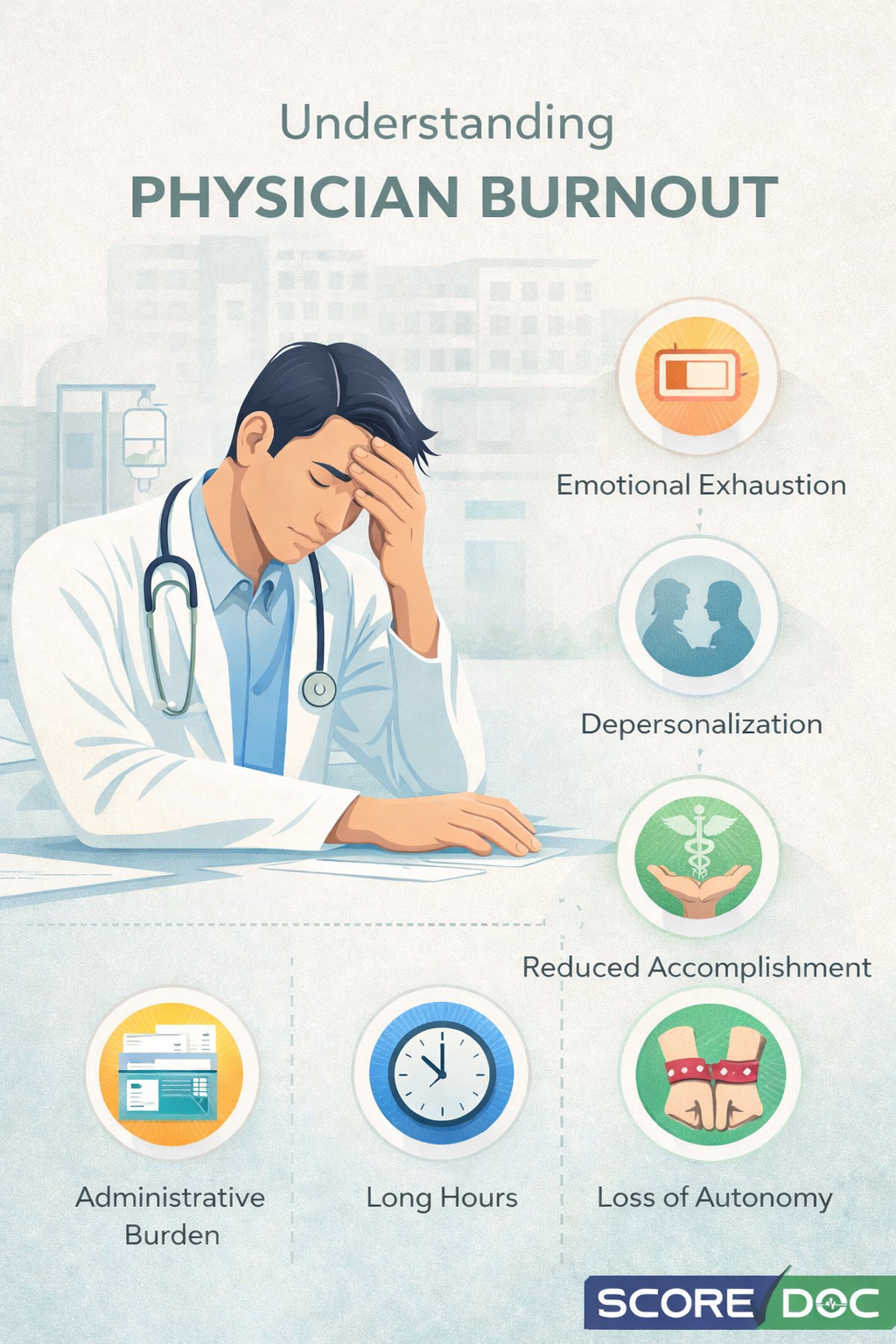
It is typically defined by three core dimensions:
- Emotional exhaustion, where physicians feel mentally and physically drained by their work
- Depersonalisation, which involves a growing sense of detachment or reduced empathy toward patients
- A reduced sense of personal accomplishment, where physicians begin to feel that their work is no longer meaningful or effective
These symptoms do not appear suddenly. They tend to build over time as ongoing stress is left unaddressed.
Unlike temporary fatigue or stress, physician burnout does not resolve with rest alone. Physicians experiencing burnout often find that even time away from work does not fully restore their energy or sense of purpose. This persistent nature is what differentiates burnout from everyday work-related stress.
In many cases, burnout can remain unnoticed in its early stages. Physicians may continue to function at a high level while gradually becoming more disengaged, making it a hidden but serious challenge within healthcare systems.
Why Physicians Are More Vulnerable
Physicians are the first point of contact in a primary health organisation, making them responsible for diagnosis, decision-making, and care coordination.
This role combines high responsibility with limited control, increasing the likelihood of burnout.
Several factors make physicians particularly vulnerable:
- Constant exposure to high-stakes decision-making
- Responsibility for patient outcomes
- Increasing system-level constraints
- Limited time for meaningful patient interaction
Research shows that burnout rates among physicians are higher than in many other professions, despite similar levels of training.
Is Your Physician Profile Already Listed ?
Your ScoreDoc profile may already exist based on publicly available physician ratings. Claim your profile today to manage your information, highlight your expertise, and build patient trust.
Key Causes of Physician Burnout
Physician burnout arises from multiple overlapping pressures within medical organisations.
One of the most significant contributors is administrative burden. Physicians today spend a substantial amount of time on documentation, billing, and electronic health records. In many cases, documentation takes up more time than direct patient care, reducing professional satisfaction.
Loss of autonomy is another major factor. Standardised processes and system constraints often limit how physicians practise medicine, creating frustration and disengagement.
Workload pressure also plays a critical role. High patient volumes, long hours, and constant time constraints contribute to sustained stress across healthcare environments.
Additionally, the emotional demands of patient care cannot be overlooked. Physicians regularly deal with patients in distress, and without adequate support, this emotional burden accumulates over time.
Signs of Physician Burnout: When to Take It Seriously
Understanding the difference between stress and physician burnout is essential.
In addition to these differences, common warning signs include:
- Persistent fatigue
- Reduced empathy toward patients
- Irritability or cynicism
- Difficulty concentrating
- Feeling ineffective or unfulfilled
How Physician Burnout Affects Patients
Physician burnout does not remain confined to the individual. It directly influences how patients experience care within any primary health organisation.
When physicians are mentally and emotionally exhausted, maintaining consistent attention, empathy, and communication becomes more difficult. Over time, this can affect both the quality of interactions and overall patient trust.
Patients may notice shorter consultations, reduced engagement, or a more transactional approach to care. While often unintentional, these shifts can lead to missed concerns, gaps in understanding, and a diminished care experience.
Burnout is also linked to higher medical errors and reduced patient safety outcomes. In high-pressure environments across medical organisations, even small lapses in attention can have serious consequences.
In addition, physician burnout can disrupt continuity of care. As doctors reduce working hours or leave practice, patients may struggle to maintain consistent, long-term relationships with their providers.
Don’t Have a ScoreDoc Profile Yet?
Help patients find trusted care. Create your ScoreDoc profile to highlight your expertise, credentials, and patient ratings.
The Impact of Physician Burnout on Healthcare Systems
Physician burnout has consequences that extend beyond individual doctors.
For physicians, it leads to declining mental health, reduced job satisfaction, and an increased likelihood of leaving practice.
For medical organisations, the operational impact includes:
- Higher turnover
- Increased recruitment costs
- Reduced efficiency
Replacing a physician can cost hundreds of thousands of dollars, making burnout both a clinical and financial concern.
How Physicians Can Manage Burnout
While physician burnout is largely driven by systemic issues, certain individual strategies can help reduce its impact.
Some practical approaches include:
- Setting clear boundaries between work and personal life
- Prioritising rest and recovery
- Seeking peer support or mentorship
- Focusing on meaningful aspects of patient care
- Developing stress management practices such as mindfulness
These steps can improve resilience, but they are not a complete solution on their own.
What Healthcare Organisations Must Do
Addressing physician burnout requires systemic change within medical organisations and every primary health organisation.
Key areas of focus include:
- Reducing administrative burden by streamlining documentation and introducing support roles
- Improving workflow efficiency, especially within EHR systems
- Monitoring physician wellbeing using structured assessment tools
- Supporting work-life balance through flexible scheduling
- Building a supportive culture with leadership training and open communication
Organisations that prioritise physician wellbeing often see improvements in both patient outcomes and staff retention.
Key Takeaways
Physician burnout is a systemic issue affecting physicians, patients, and healthcare systems across all levels of care. It is driven largely by structural challenges such as administrative burden, workload pressure, and reduced autonomy within medical organisations.
The impact goes beyond doctor burnout, influencing patient outcomes, safety, and operational efficiency. While individual strategies can help physicians cope, meaningful and lasting change requires action from healthcare organisations.
Improving both physician well-being and patient decision-making will be critical as healthcare continues to evolve. Greater transparency and access to consolidated insights can support better outcomes across the system.
Making Better Healthcare Decisions in a Complex System
Healthcare today is complex for both providers and patients.
Physician burnout does not just affect doctors. It also influences how patients experience care, including communication, responsiveness, and overall trust.
For patients, choosing the right provider increasingly depends on understanding real patient experiences rather than relying solely on credentials.
However, this information is often fragmented across multiple platforms.
This is where ScoreDoc brings clarity.
Aggregating verified patient feedback from multiple sources into one structured view helps patients identify consistent patterns in care quality and experience. Instead of relying on isolated reviews, patients can make more informed decisions based on broader insights.
With ScoreDoc, patients can access consolidated physician reputation insights in one place and evaluate providers with greater clarity.
FAQs
1. What causes physician burnout?
A combination of factors, including administrative burden, long working hours, emotional stress, and lack of autonomy within healthcare systems, causes physician burnout.
2. How common is physician burnout?
Studies indicate that more than 45% of physicians experience at least one symptom of burnout, making it a widespread issue in healthcare.
3. What are the early signs of burnout?
Early signs include fatigue, irritability, reduced empathy, and a declining sense of accomplishment.
4. Can physician burnout be prevented?
Burnout can be managed through both individual strategies and organisational changes, but long-term prevention requires system-level improvements.
5. Why does physician burnout matter to patients?
Burnout can affect communication, decision-making, and overall quality of care, directly impacting patient outcomes and experience.
6. What does physician burnout feel like?
Physician burnout feels like ongoing mental and emotional exhaustion that does not improve with rest. Doctors may feel detached from patients, less engaged in their work, and struggle with motivation or focus.
7. How to avoid burnout as a physician?
Physicians can reduce burnout by setting boundaries, prioritising rest, seeking peer support, and focusing on meaningful patient care. Long-term prevention, however, requires support from medical organisations.
8. What is the leading cause of physician burnout?
The leading cause of physician burnout is administrative burden, including documentation, billing, and electronic health record tasks that reduce time spent on patient care.

Take ScoreDoc With You
Looking for a doctor while on the go?
Download the ScoreDoc app and check reviews anytime, anywhere.